
An Experience of Open Roles in Tango
WITH FERNANDA GHI & DANIEL TRENNER
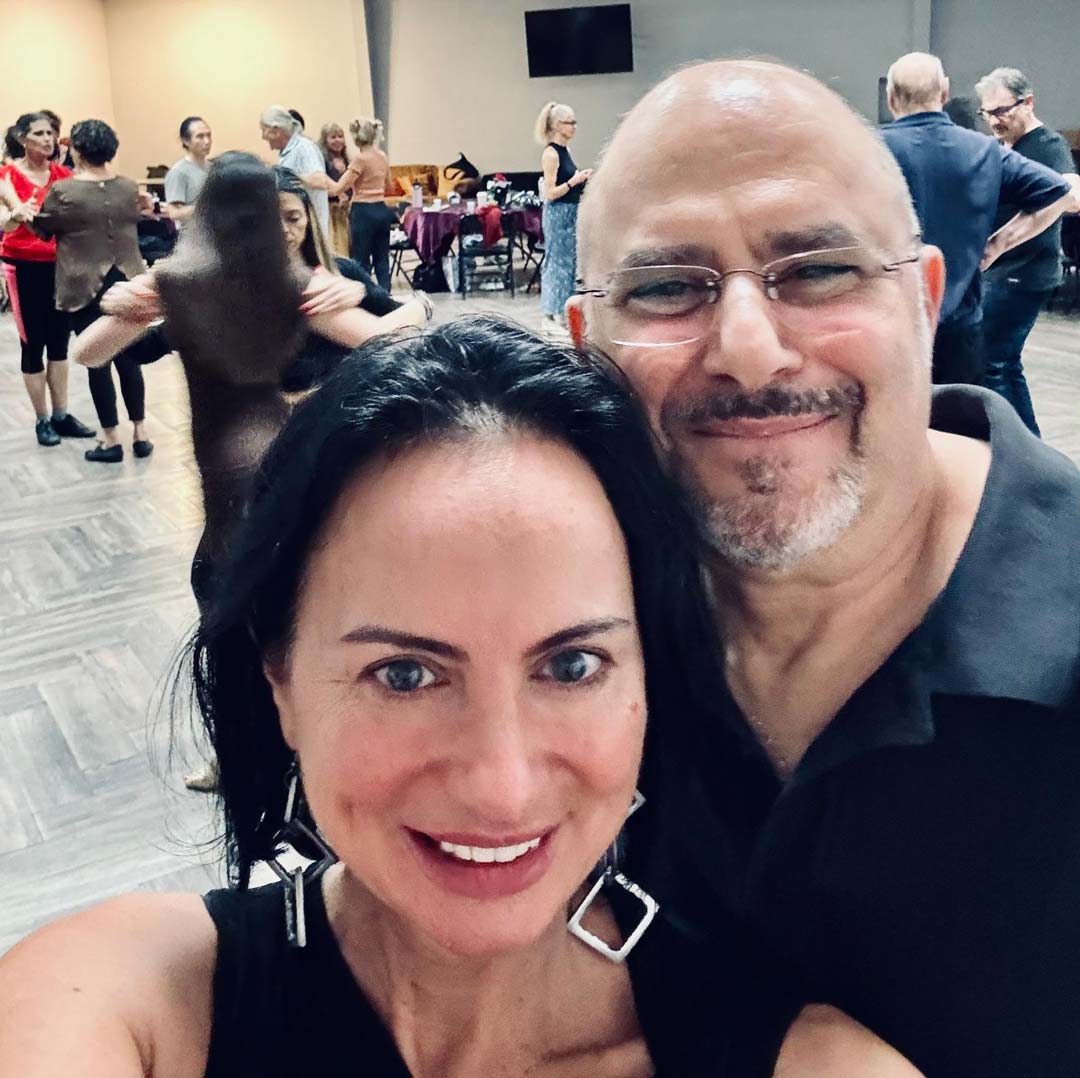
For this event, Fernanda Ghi has chosen to collaborate with a very special artist within the tango world: Daniel Trenner, a professional she deeply respects for his artistic integrity, his pedagogical clarity, and his more than 30 years of dedication to Argentine Tango.
Daniel Trenner is internationally recognized as a pioneer in the exploration of role exchange in tango, not as a stylistic trend, but as a powerful tool for personal growth, awareness, and deeper understanding of one’s own role. His work has consistently honored tradition while opening space for evolution.
Over several decades, Daniel has also made an invaluable contribution to tango history by carefully documenting the dance through a series of videos featuring some of the most important tango masters from the 1990s to the present. Through this work, he helped preserve the essence of traditional tango while translating it with clarity and respect to different cultures around the world. His pedagogy is firmly rooted in the study of traditional tango, approached with openness, precision, and deep cultural understanding.
A Shared History, A Shared Vision
Fernanda Ghi and Daniel Trenner belong to the first generation of the tango revival, which began in Buenos Aires in the 1980s. Their paths come from different worlds, yet converge in a powerful and complementary dialogue.
Fernanda comes from Argentine contemporary dance and rose to international recognition as a tango stage performer. She is a tango woman formed within the traditionally patriarchal structure of Buenos Aires tango culture.
Daniel arrived in Buenos Aires in 1987 as a guest artist at the National School of Contemporary Dance, teaching improvisation, jazz, and composition. He encountered tango at a time when there were fewer than a few dozen tango dancers under the age of 60 in the city. He is a tango man shaped by the feminist dance culture of the United States.
Their collaboration brings together two lived experiences, two cultural perspectives, and two ways of inhabiting tango, creating a rare and fertile space for dialogue.
The Origin of Open Roles
In 2020, just one week before the pandemic shut everything down, Fernanda and Daniel led their first shared experience of Open Roles in Tango at Fernanda’s Art Tango Studio in Boston. The work was enthusiastically received by a group composed of some of the most advanced social tango dancers in Massachusetts.
Today, they return with Open Roles 2.0, expanding and deepening the original exploration.
Historically, learning both roles is not new to tango. During the Golden Age of the 1930s and 1940s, men were required to learn how to follow before being allowed to lead. Women practiced with family members or trusted friends. One had to truly know how to dance before stepping onto the milonga floor. The rules were strict, and intimacy was present, though rarely discussed openly.
What Fernanda and Daniel have discovered is that learning both roles in today’s tango environment allows dancers of all genders to access tango in a deeper, more expansive way. By engaging in both leading and following, dancers develop listening skills, empathy, clarity, and a more honest connection with themselves and with others.
This is why they call it Open Roles.
Open to learning.
Open to listening.
Open to dialogue.
Open to switching.
Beyond Gender, Toward Connection
Open Roles takes social dancing into a broader territory, where learning both iconic tango roles becomes a way to explore connection, communication, and identity. Gender does not define the dance — connection does.
Rules relax.
The embrace softens.
The dialogue deepens.
Tradition and change are not in conflict; they can collaborate and embrace. Tango reinvents itself without losing its soul. When roles are open, freedom and equality meet. We can all propose, and we can all respond.
This gathering is designed for interested dancers, experienced tango dancers, and teachers of all forms of social partner dance who are curious about expanding their understanding of tango and of themselves.
We honor tango by allowing it to evolve.
We dance tango’s future while honoring its roots.
Let tango expand. Let it breathe.
Through Open Roles, we deepen our connection.
An Experience of Open Roles in Tango
WITH FERNANDA GHI & DANIEL TRENNER
For this event, Fernanda Ghi has chosen to collaborate with a very special artist within the tango world: Daniel Trenner, a professional she deeply respects for his artistic integrity, his pedagogical clarity, and his more than 30 years of dedication to Argentine Tango.
Daniel Trenner is internationally recognized as a pioneer in the exploration of role exchange in tango, not as a stylistic trend, but as a powerful tool for personal growth, awareness, and deeper understanding of one’s own role. His work has consistently honored tradition while opening space for evolution.
Over several decades, Daniel has also made an invaluable contribution to tango history by carefully documenting the dance through a series of videos featuring some of the most important tango masters from the 1990s to the present. Through this work, he helped preserve the essence of traditional tango while translating it with clarity and respect to different cultures around the world. His pedagogy is firmly rooted in the study of traditional tango, approached with openness, precision, and deep cultural understanding.
A Shared History, A Shared Vision
Fernanda Ghi and Daniel Trenner belong to the first generation of the tango revival, which began in Buenos Aires in the 1980s. Their paths come from different worlds, yet converge in a powerful and complementary dialogue.
Fernanda comes from Argentine contemporary dance and rose to international recognition as a tango stage performer. She is a tango woman formed within the traditionally patriarchal structure of Buenos Aires tango culture.
Daniel arrived in Buenos Aires in 1987 as a guest artist at the National School of Contemporary Dance, teaching improvisation, jazz, and composition. He encountered tango at a time when there were fewer than a few dozen tango dancers under the age of 60 in the city. He is a tango man shaped by the feminist dance culture of the United States.
Their collaboration brings together two lived experiences, two cultural perspectives, and two ways of inhabiting tango, creating a rare and fertile space for dialogue.
The Origin of Open Roles
In 2020, just one week before the pandemic shut everything down, Fernanda and Daniel led their first shared experience of Open Roles in Tango at Fernanda’s Art Tango Studio in Boston. The work was enthusiastically received by a group composed of some of the most advanced social tango dancers in Massachusetts.
Today, they return with Open Roles 2.0, expanding and deepening the original exploration.
Historically, learning both roles is not new to tango. During the Golden Age of the 1930s and 1940s, men were required to learn how to follow before being allowed to lead. Women practiced with family members or trusted friends. One had to truly know how to dance before stepping onto the milonga floor. The rules were strict, and intimacy was present, though rarely discussed openly.
What Fernanda and Daniel have discovered is that learning both roles in today’s tango environment allows dancers of all genders to access tango in a deeper, more expansive way. By engaging in both leading and following, dancers develop listening skills, empathy, clarity, and a more honest connection with themselves and with others.
This is why they call it Open Roles.
Open to learning.
Open to listening.
Open to dialogue.
Open to switching.
Beyond Gender, Toward Connection
Open Roles takes social dancing into a broader territory, where learning both iconic tango roles becomes a way to explore connection, communication, and identity. Gender does not define the dance — connection does.
Rules relax.
The embrace softens.
The dialogue deepens.
Tradition and change are not in conflict; they can collaborate and embrace. Tango reinvents itself without losing its soul. When roles are open, freedom and equality meet. We can all propose, and we can all respond.
This gathering is designed for interested dancers, experienced tango dancers, and teachers of all forms of social partner dance who are curious about expanding their understanding of tango and of themselves.
We honor tango by allowing it to evolve.
We dance tango’s future while honoring its roots.
Let tango expand. Let it breathe.
Through Open Roles, we deepen our connection.
AN EXPERIENCE OF OPEN ROLES IN TANGO
WITH FERNANDA GHI & DANIEL TRENNER
For this event, Fernanda Ghi has chosen to collaborate with a very special artist within the tango world: Daniel Trenner, a professional she deeply respects for his artistic integrity, his pedagogical clarity, and his more than 30 years of dedication to Argentine Tango.
Daniel Trenner is internationally recognized as a pioneer in the exploration of role exchange in tango, not as a stylistic trend, but as a powerful tool for personal growth, awareness, and deeper understanding of one’s own role. His work has consistently honored tradition while opening space for evolution.
Over several decades, Daniel has also made an invaluable contribution to tango history by carefully documenting the dance through a series of videos featuring some of the most important tango masters from the 1990s to the present. Through this work, he helped preserve the essence of traditional tango while translating it with clarity and respect to different cultures around the world. His pedagogy is firmly rooted in the study of traditional tango, approached with openness, precision, and deep cultural understanding.
A Shared History, A Shared Vision
Fernanda Ghi and Daniel Trenner belong to the first generation of the tango revival, which began in Buenos Aires in the 1980s. Their paths come from different worlds, yet converge in a powerful and complementary dialogue.
Fernanda comes from Argentine contemporary dance and rose to international recognition as a tango stage performer. She is a tango woman formed within the traditionally patriarchal structure of Buenos Aires tango culture.
Daniel arrived in Buenos Aires in 1987 as a guest artist at the National School of Contemporary Dance, teaching improvisation, jazz, and composition. He encountered tango at a time when there were fewer than a few dozen tango dancers under the age of 60 in the city. He is a tango man shaped by the feminist dance culture of the United States.
Their collaboration brings together two lived experiences, two cultural perspectives, and two ways of inhabiting tango, creating a rare and fertile space for dialogue.
The Origin of Open Roles
In 2020, just one week before the pandemic shut everything down, Fernanda and Daniel led their first shared experience of Open Roles in Tango at Fernanda’s Art Tango Studio in Boston. The work was enthusiastically received by a group composed of some of the most advanced social tango dancers in Massachusetts.
Today, they return with Open Roles 2.0, expanding and deepening the original exploration.
Historically, learning both roles is not new to tango. During the Golden Age of the 1930s and 1940s, men were required to learn how to follow before being allowed to lead. Women practiced with family members or trusted friends. One had to truly know how to dance before stepping onto the milonga floor. The rules were strict, and intimacy was present, though rarely discussed openly.
What Fernanda and Daniel have discovered is that learning both roles in today’s tango environment allows dancers of all genders to access tango in a deeper, more expansive way. By engaging in both leading and following, dancers develop listening skills, empathy, clarity, and a more honest connection with themselves and with others.
This is why they call it Open Roles.
Open to learning.
Open to listening.
Open to dialogue.
Open to switching.
Beyond Gender, Toward Connection
Open Roles takes social dancing into a broader territory, where learning both iconic tango roles becomes a way to explore connection, communication, and identity. Gender does not define the dance — connection does.
Rules relax.
The embrace softens.
The dialogue deepens.
Tradition and change are not in conflict; they can collaborate and embrace. Tango reinvents itself without losing its soul. When roles are open, freedom and equality meet. We can all propose, and we can all respond.
This gathering is designed for interested dancers, experienced tango dancers, and teachers of all forms of social partner dance who are curious about expanding their understanding of tango and of themselves.
We honor tango by allowing it to evolve.
We dance tango’s future while honoring its roots.
Let tango expand. Let it breathe.
Through Open Roles, we deepen our connection.