


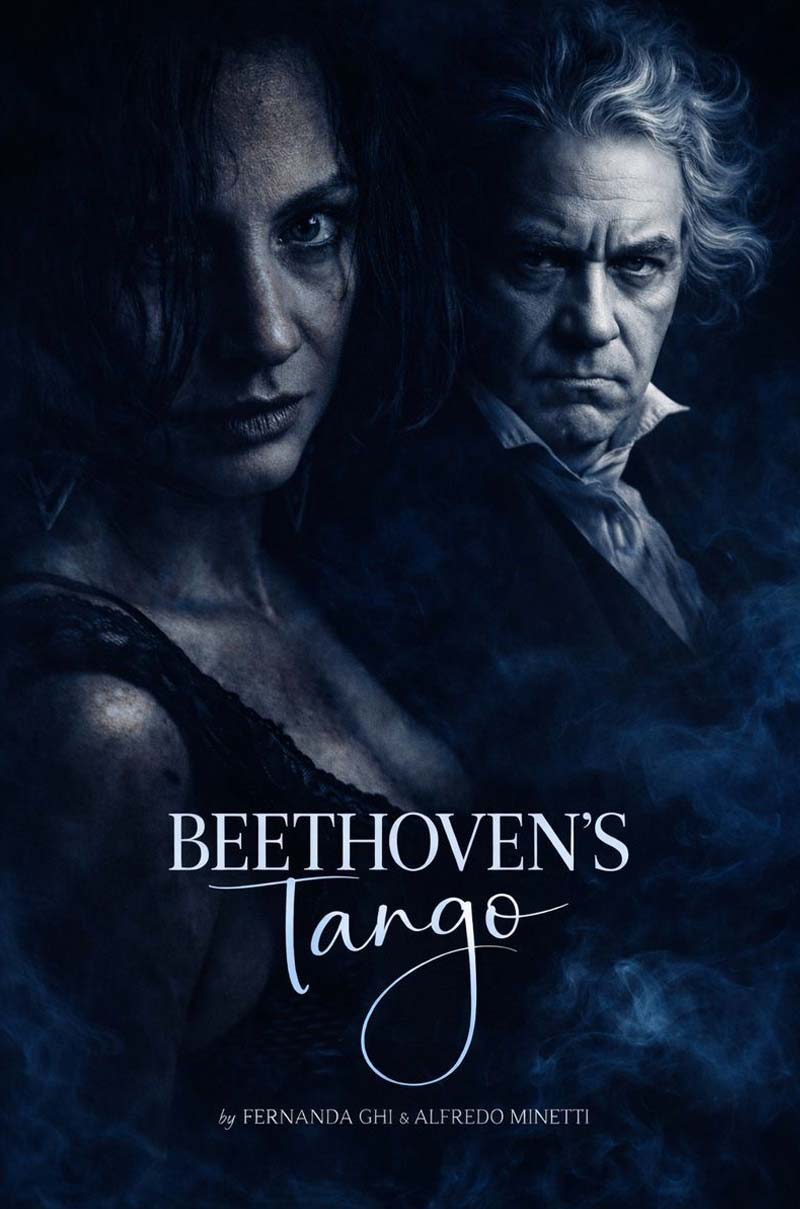
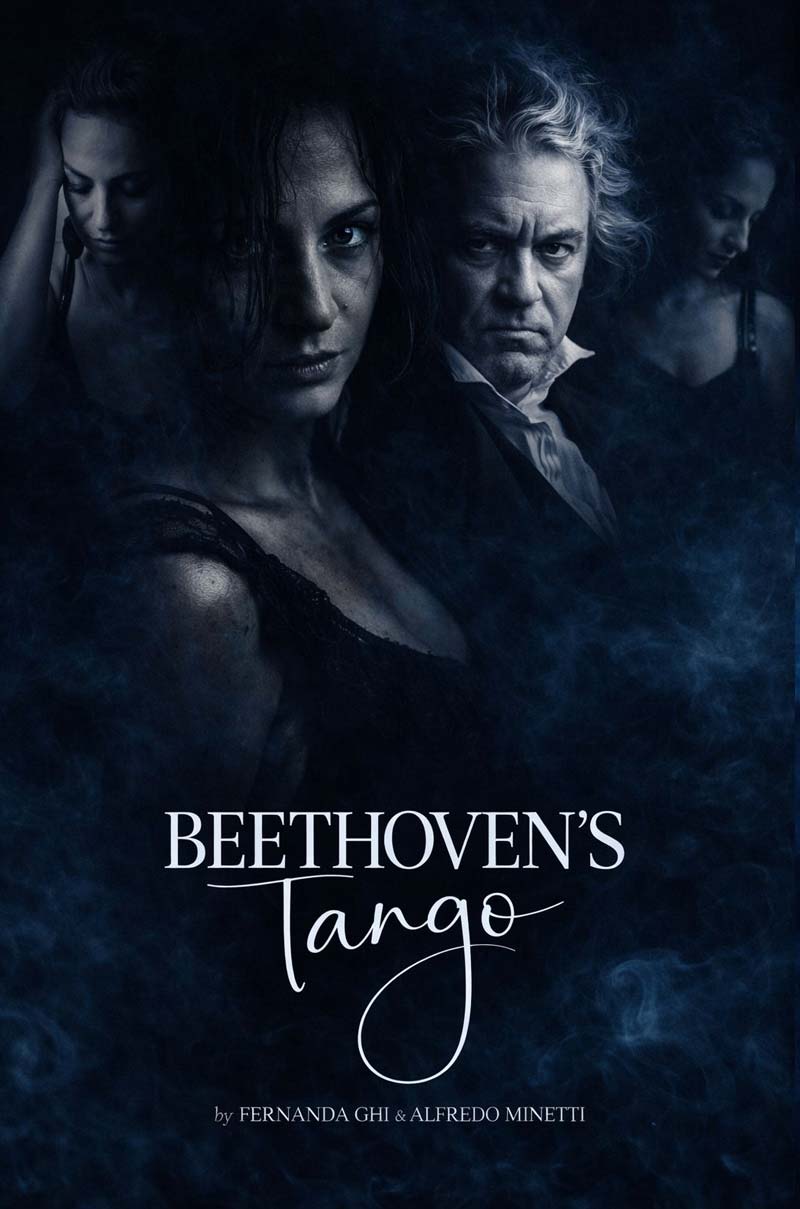
Beethoven’s Tango traces the artist’s most private struggle—the need to reach the place where creation truly begins.
It moves through a delicate, charged space, where urgency meets vulnerability, where expression is born from necessity.
This is an inward journey, guided not by ideas but by feelings. The body listens, surrenders, and becomes the passage through which something deeper emerges.
Creation is no longer an act of invention, but of becoming.
Beethoven’s Tango traces the artist’s most private struggle—the need to reach the place where creation truly begins.
It moves through a delicate, charged space, where urgency meets vulnerability, where expression is born from necessity.
This is an inward journey, guided not by ideas but by feelings. The body listens, surrenders, and becomes the passage through which something deeper emerges.
Creation is no longer an act of invention, but of becoming.
Beethoven’s Tango traces the artist’s most private struggle—the need to reach the place where creation truly begins.
It moves through a delicate, charged space, where urgency meets vulnerability, where expression is born from necessity.
This is an inward journey, guided not by ideas but by feelings. The body listens, surrenders, and becomes the passage through which something deeper emerges.
Creation is no longer an act of invention, but of becoming.
WITHIN THIS UNFOLDING, THREE ELEMENTAL CREATIVE FORCES TAKE FORM
WITHIN THIS UNFOLDING, THREE ELEMENTAL CREATIVE FORCES TAKE FORM
THE MUSE
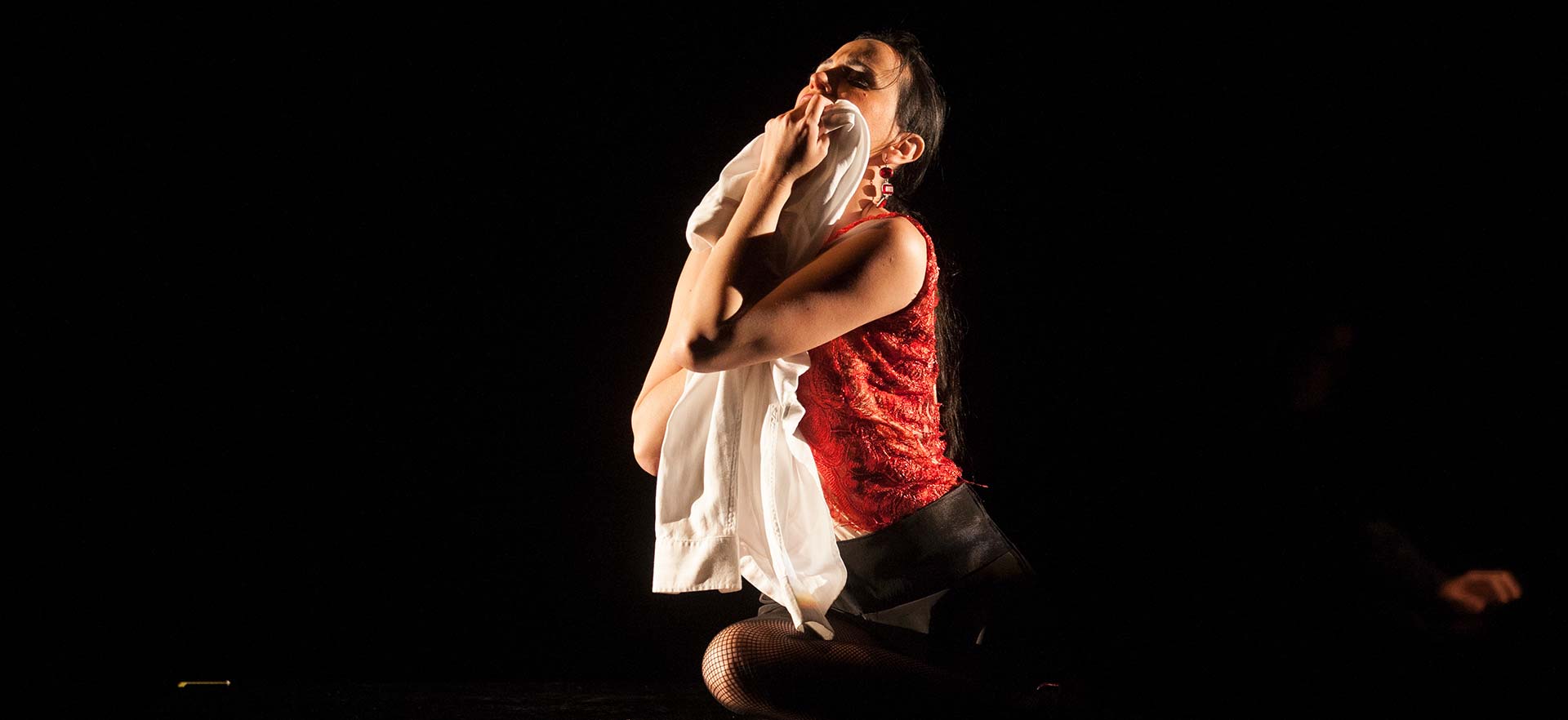
The Muse embodies form, order, and seduction. She arrives from outside the artist, offering structure and possibility, shaping contours without touching the core. She inspires but does not transfigure; she opens doors but never crosses them. Her gifts remain partial, seductive yet distant, belonging more to the promise of creation than to its truth.
THE MUSE
The Muse embodies form, order, and seduction. She arrives from outside the artist, offering structure and possibility, shaping contours without touching the core. She inspires but does not transfigure; she opens doors but never crosses them. Her gifts remain partial, seductive yet distant, belonging more to the promise of creation than to its truth.
THE MUSE
The Muse embodies form, order, and seduction. She arrives from outside the artist, offering structure and possibility, shaping contours without touching the core. She inspires but does not transfigure; she opens doors but never crosses them. Her gifts remain partial, seductive yet distant, belonging more to the promise of creation than to its truth.
THE ANGEL
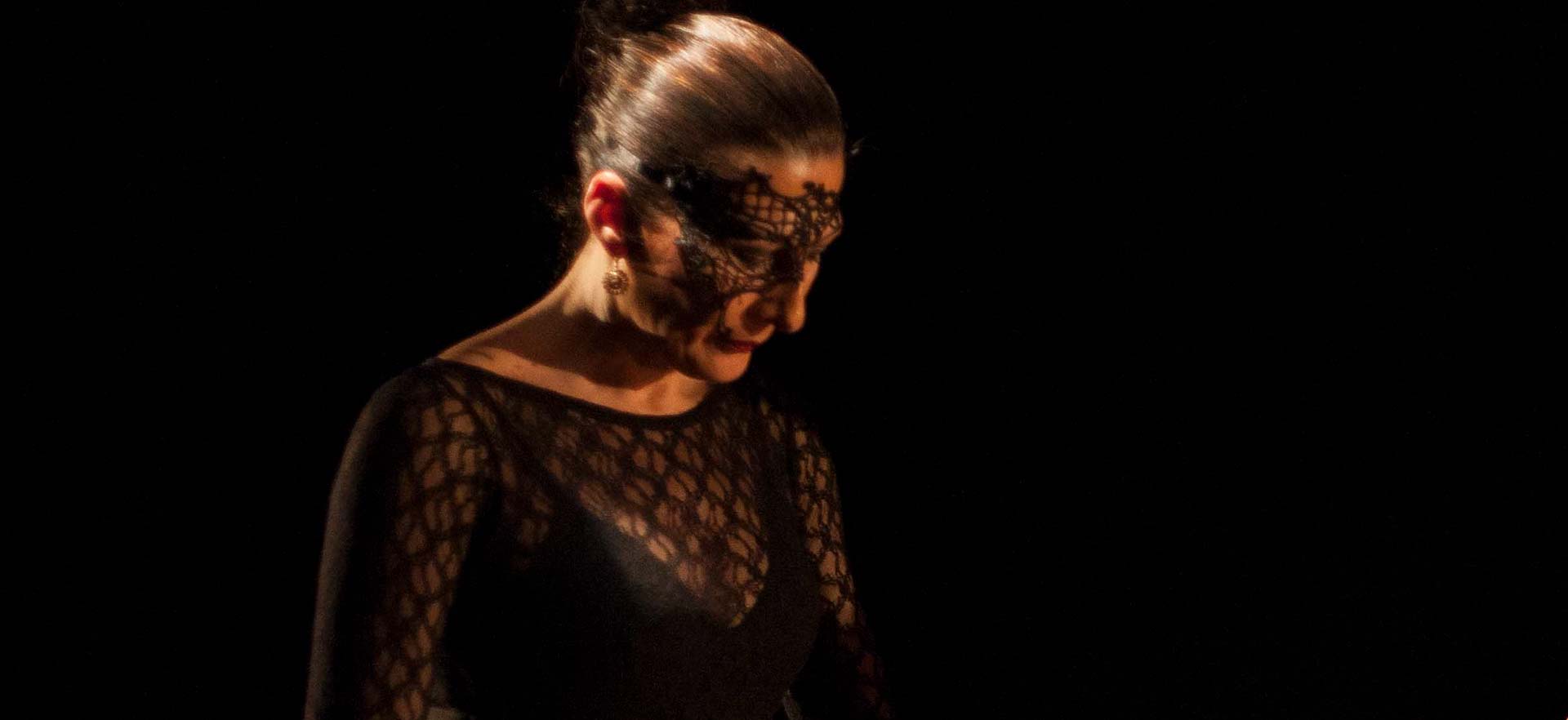
The Angel follows as a protective presence. Not a promise of transcendence, but a steady hand. The Angel does not remove pain, but prevents collapse—offering guidance, restraint, and the possibility of continuing despite silence and doubt.
THE ANGEL
The Angel follows as a protective presence. Not a promise of transcendence, but a steady hand. The Angel does not remove pain, but prevents collapse—offering guidance, restraint, and the possibility of continuing despite silence and doubt.
THE ANGEL
The Angel follows as a protective presence. Not a promise of transcendence, but a steady hand. The Angel does not remove pain, but prevents collapse—offering guidance, restraint, and the possibility of continuing despite silence and doubt.
THE DUENDE
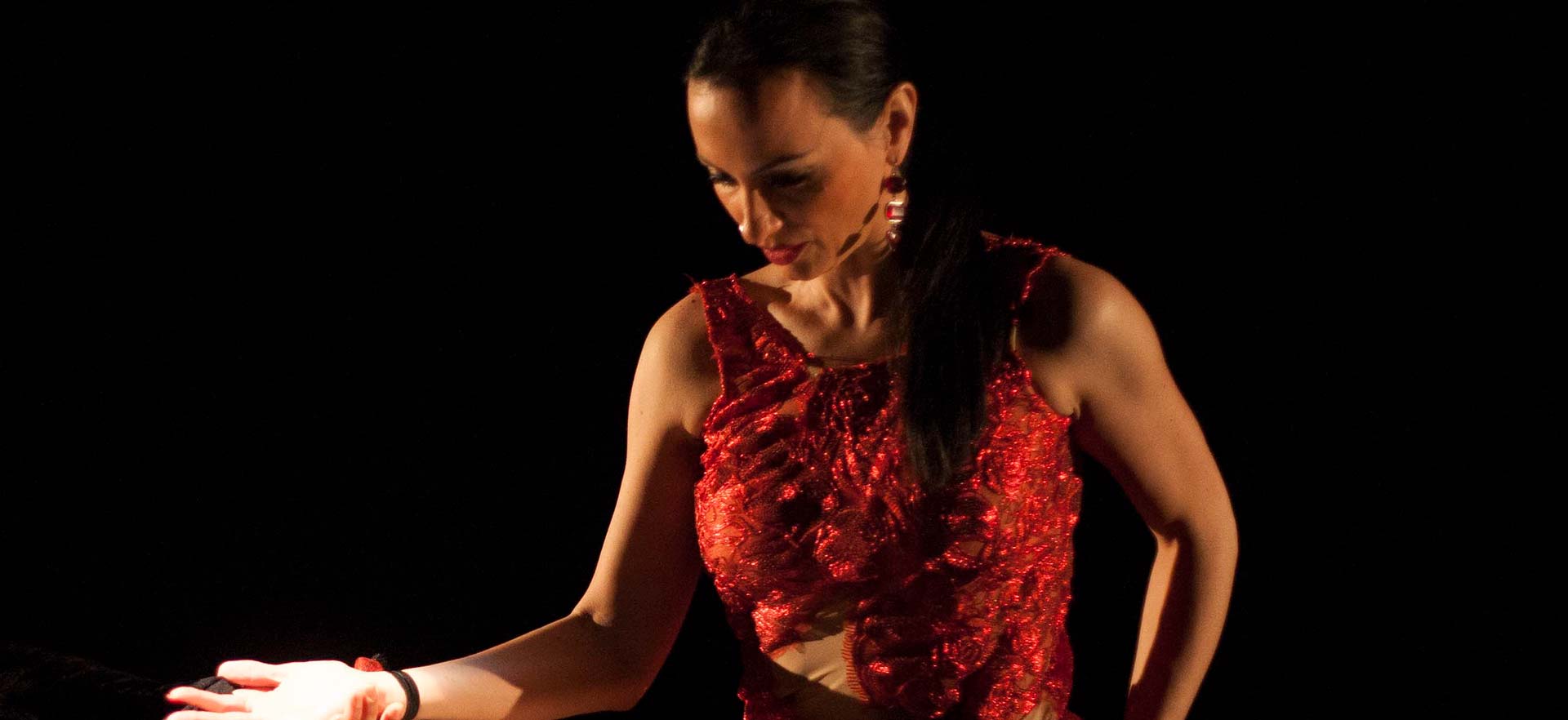
Finally, the Duende arises. Earthbound, intense, unsettling. The Duende lives in the shadow, with clenched teeth and feet firmly on the ground. It is raw emotion, finitude, risk, and truth. It does not seek perfection, but authenticity. It does not soothe—it demands. It shakes what trembles and pushes creation beyond control, into depth.
THE DUENDE
Finally, the Duende arises. Earthbound, intense, unsettling. The Duende lives in the shadow, with clenched teeth and feet firmly on the ground. It is raw emotion, finitude, risk, and truth. It does not seek perfection, but authenticity. It does not soothe—it demands. It shakes what trembles and pushes creation beyond control, into depth.
THE DUENDE
Finally, the Duende arises. Earthbound, intense, unsettling. The Duende lives in the shadow, with clenched teeth and feet firmly on the ground. It is raw emotion, finitude, risk, and truth. It does not seek perfection, but authenticity. It does not soothe—it demands. It shakes what trembles and pushes creation beyond control, into depth.
Musically and choreographically, Beethoven’s Tango gives corporeal and sonic form to these forces through a living dialogue between two artists: Fernanda Ghi and Alfredo Minetti. Classical music and Argentine tango intertwine, not as fusion but as tension—an encounter in which music and movement confront, resist, and transform one another. What emerges is a space of friction, where form trembles and expression becomes embodied.
Beyond its aesthetic surface, this work asserts that the Duende does not belong solely to artists, nor to any single tradition or culture. It is a latent force within all human beings: a creative pulse capable of restoring depth, meaning, and presence in a world increasingly flattened by speed, consumption, and spectacle.
Beethoven’s Tango thus proposes a return—not to nostalgia, but to depth. To authorship and co-authorship rooted in risk. To interpretation driven by necessity rather than ornament. It invites the audience to recognize themselves within this struggle, and to encounter their own Duende: the inner force that resists, creates, and insists on expression of uncompromising authenticity.
Musically and choreographically, Beethoven’s Tango gives corporeal and sonic form to these forces through a living dialogue between two artists: Fernanda Ghi and Alfredo Minetti. Classical music and Argentine tango intertwine, not as fusion but as tension—an encounter in which music and movement confront, resist, and transform one another. What emerges is a space of friction, where form trembles and expression becomes embodied.
Beyond its aesthetic surface, this work asserts that the Duende does not belong solely to artists, nor to any single tradition or culture. It is a latent force within all human beings: a creative pulse capable of restoring depth, meaning, and presence in a world increasingly flattened by speed, consumption, and spectacle.
Beethoven’s Tango thus proposes a return—not to nostalgia, but to depth. To authorship and co-authorship rooted in risk. To interpretation driven by necessity rather than ornament. It invites the audience to recognize themselves within this struggle, and to encounter their own Duende: the inner force that resists, creates, and insists on expression of uncompromising authenticity.
Musically and choreographically, Beethoven’s Tango gives corporeal and sonic form to these forces through a living dialogue between two artists: Fernanda Ghi and Alfredo Minetti. Classical music and Argentine tango intertwine, not as fusion but as tension—an encounter in which music and movement confront, resist, and transform one another. What emerges is a space of friction, where form trembles and expression becomes embodied.
Beyond its aesthetic surface, this work asserts that the Duende does not belong solely to artists, nor to any single tradition or culture. It is a latent force within all human beings: a creative pulse capable of restoring depth, meaning, and presence in a world increasingly flattened by speed, consumption, and spectacle.
Beethoven’s Tango thus proposes a return—not to nostalgia, but to depth. To authorship and co-authorship rooted in risk. To interpretation driven by necessity rather than ornament. It invites the audience to recognize themselves within this struggle, and to encounter their own Duende: the inner force that resists, creates, and insists on expression of uncompromising authenticity.
THE PARTNERSHIP
THE PARTNERSHIP
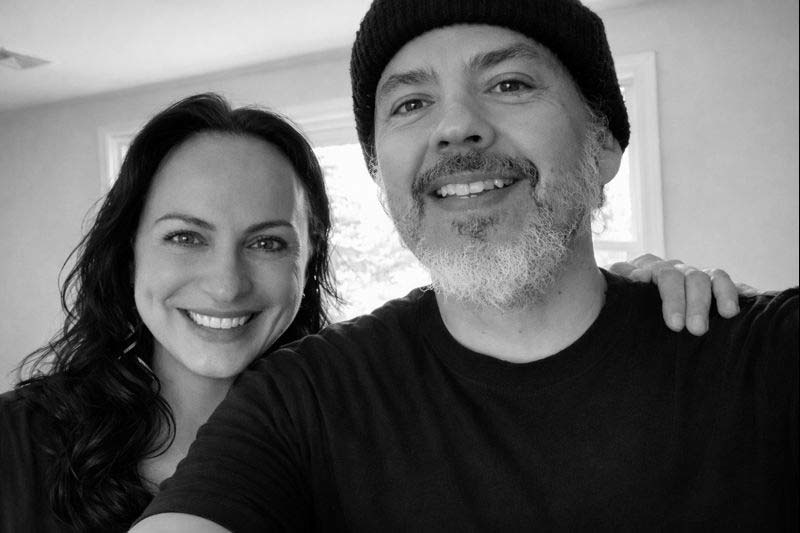
Fernanda Ghi & Alfredo Minetti
• Alfredo Minetti brings to this work a rare synthesis of musical expressiveness and anthropological insight. His long-standing engagement with both classical repertoire and tango allows him to move beyond stylistic boundaries, focusing instead on meaning, tension, silence, and emotional structure. In Beethoven’s Tango, Minetti approaches Ludwig van Beethoven not as a myth, but as a living, conflicted, and profoundly human artist—marked by inner struggle, physical limitations, and radical creative freedom. Beethoven’s relationship with silence, sound, and form becomes the central axis of his musical language.
• Fernanda Ghi translates this inner universe into movement. Drawing from tango, contemporary dance, and theatrical composition, she explores the body as a thinking, listening organism. In this work, tango is stripped of adornments and social conventions, becoming an intimate language capable of expressing fragility, desire, resistance, and transformation. Her choreographic vision focuses on the feminine forces present in Beethoven’s life and imagination— muse, protector, unreachable love, inner fire—embodied
Fernanda Ghi & Alfredo Minetti
• Alfredo Minetti brings to this work a rare synthesis of musical expressiveness and anthropological insight. His long-standing engagement with both classical repertoire and tango allows him to move beyond stylistic boundaries, focusing instead on meaning, tension, silence, and emotional structure. In Beethoven’s Tango, Minetti approaches Ludwig van Beethoven not as a myth, but as a living, conflicted, and profoundly human artist—marked by inner struggle, physical limitations, and radical creative freedom. Beethoven’s relationship with silence, sound, and form becomes the central axis of his musical language.
• Fernanda Ghi translates this inner universe into movement. Drawing from tango, contemporary dance, and theatrical composition, she explores the body as a thinking, listening organism. In this work, tango is stripped of adornments and social conventions, becoming an intimate language capable of expressing fragility, desire, resistance, and transformation. Her choreographic vision focuses on the feminine forces present in Beethoven’s life and imagination— muse, protector, unreachable love, inner fire—embodied
THE ENSEMBLE
THE ENSEMBLE
Fernanda Ghi
Artistic Director, Dancer & Choreographer
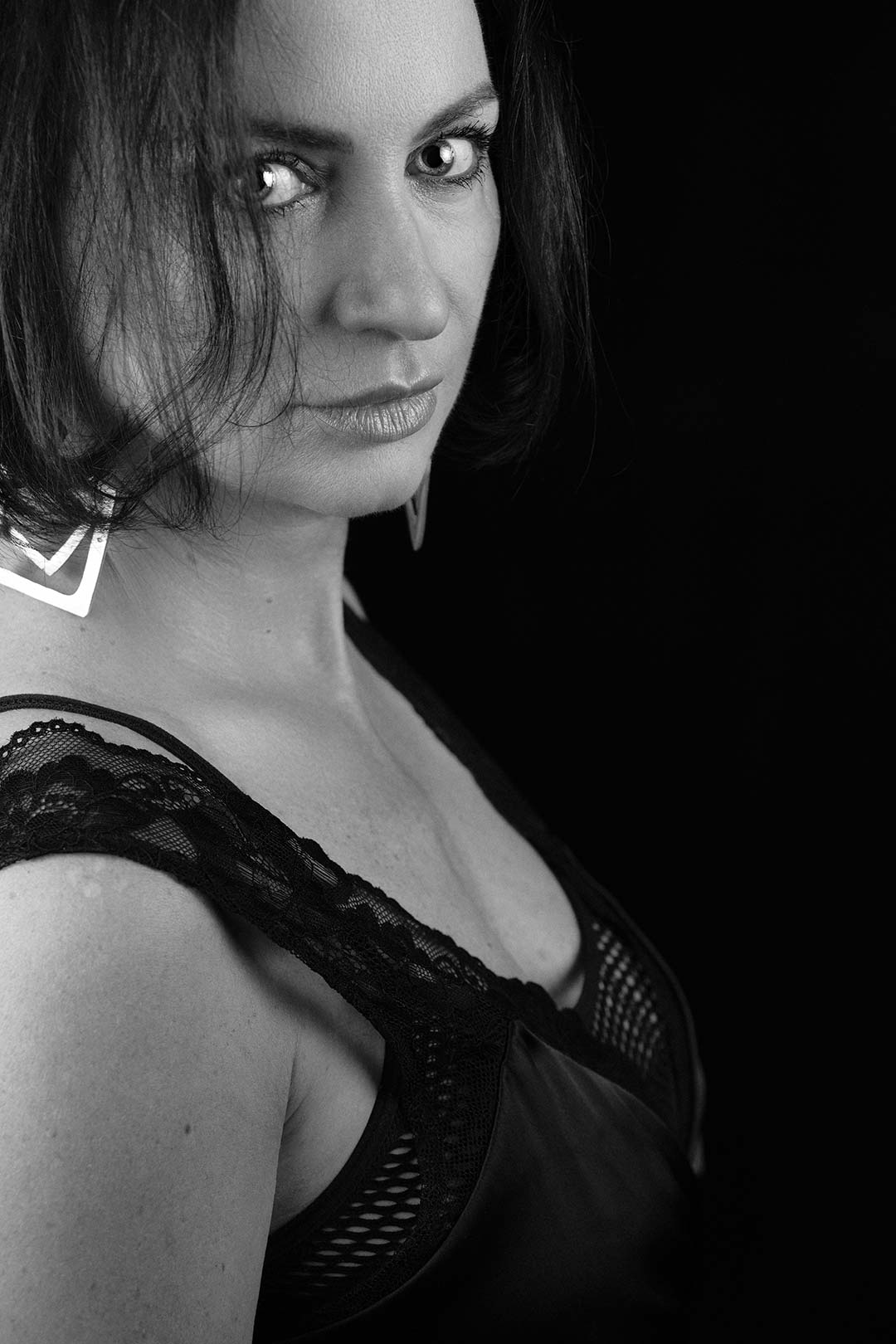
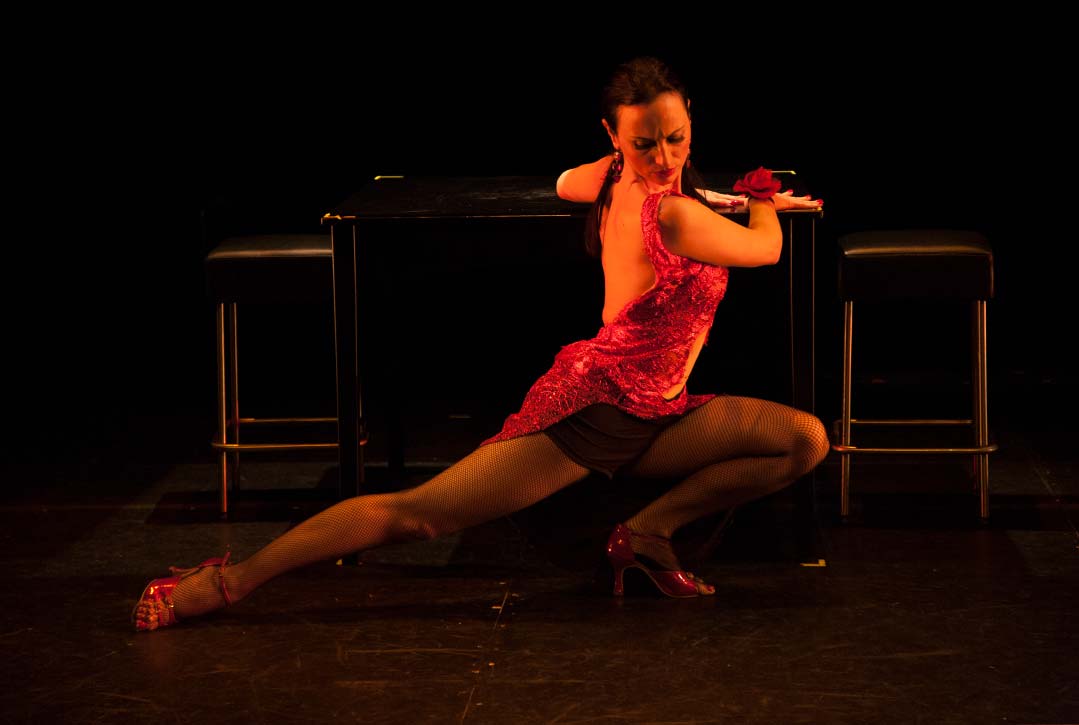
• Dancer, choreographer, and artistic director, Fernanda Ghi is one of the most influential figures in contemporary tango on the international stage. Her career spans theaters, festivals, and companies across the Americas, Europe, and Asia, and is defined by a profound investigation of the body, identity, and human connection.
• Fernanda understands tango as a living language—one that is not repeated, but listened to, embodied, and transformed. Her work places presence, musicality, and the quality of the embrace at the center, conceiving technique as a pathway toward a more honest, sensitive, and deeply expressive dance.
• As a director, she creates stage works that integrate tango, live music, theater, and contemporary movement, offering experiences in which the stage becomes a meeting ground between eras, aesthetics, and memories. Her artistic and pedagogical work is marked by an inclusive and committed vision, inviting performers and audiences alike to inhabit tango as art, culture, and human experience.
Fernanda Ghi
Artistic Director, Dancer & Choreographer
• Dancer, choreographer, and artistic director, Fernanda Ghi is one of the most influential figures in contemporary tango on the international stage. Her career spans theaters, festivals, and companies across the Americas, Europe, and Asia, and is defined by a profound investigation of the body, identity, and human connection.
• Fernanda understands tango as a living language—one that is not repeated, but listened to, embodied, and transformed. Her work places presence, musicality, and the quality of the embrace at the center, conceiving technique as a pathway toward a more honest, sensitive, and deeply expressive dance.
• As a director, she creates stage works that integrate tango, live music, theater, and contemporary movement, offering experiences in which the stage becomes a meeting ground between eras, aesthetics, and memories. Her artistic and pedagogical work is marked by an inclusive and committed vision, inviting performers and audiences alike to inhabit tango as art, culture, and human experience.
Fernanda Ghi
Artistic Director, Dancer & Choreographer
• Dancer, choreographer, and artistic director, Fernanda Ghi is one of the most influential figures in contemporary tango on the international stage. Her career spans theaters, festivals, and companies across the Americas, Europe, and Asia, and is defined by a profound investigation of the body, identity, and human connection.
• Fernanda understands tango as a living language—one that is not repeated, but listened to, embodied, and transformed. Her work places presence, musicality, and the quality of the embrace at the center, conceiving technique as a pathway toward a more honest, sensitive, and deeply expressive dance.
• As a director, she creates stage works that integrate tango, live music, theater, and contemporary movement, offering experiences in which the stage becomes a meeting ground between eras, aesthetics, and memories. Her artistic and pedagogical work is marked by an inclusive and committed vision, inviting performers and audiences alike to inhabit tango as art, culture, and human experience.
Alfredo Minetti
Pianist, Composer & Anthropologist
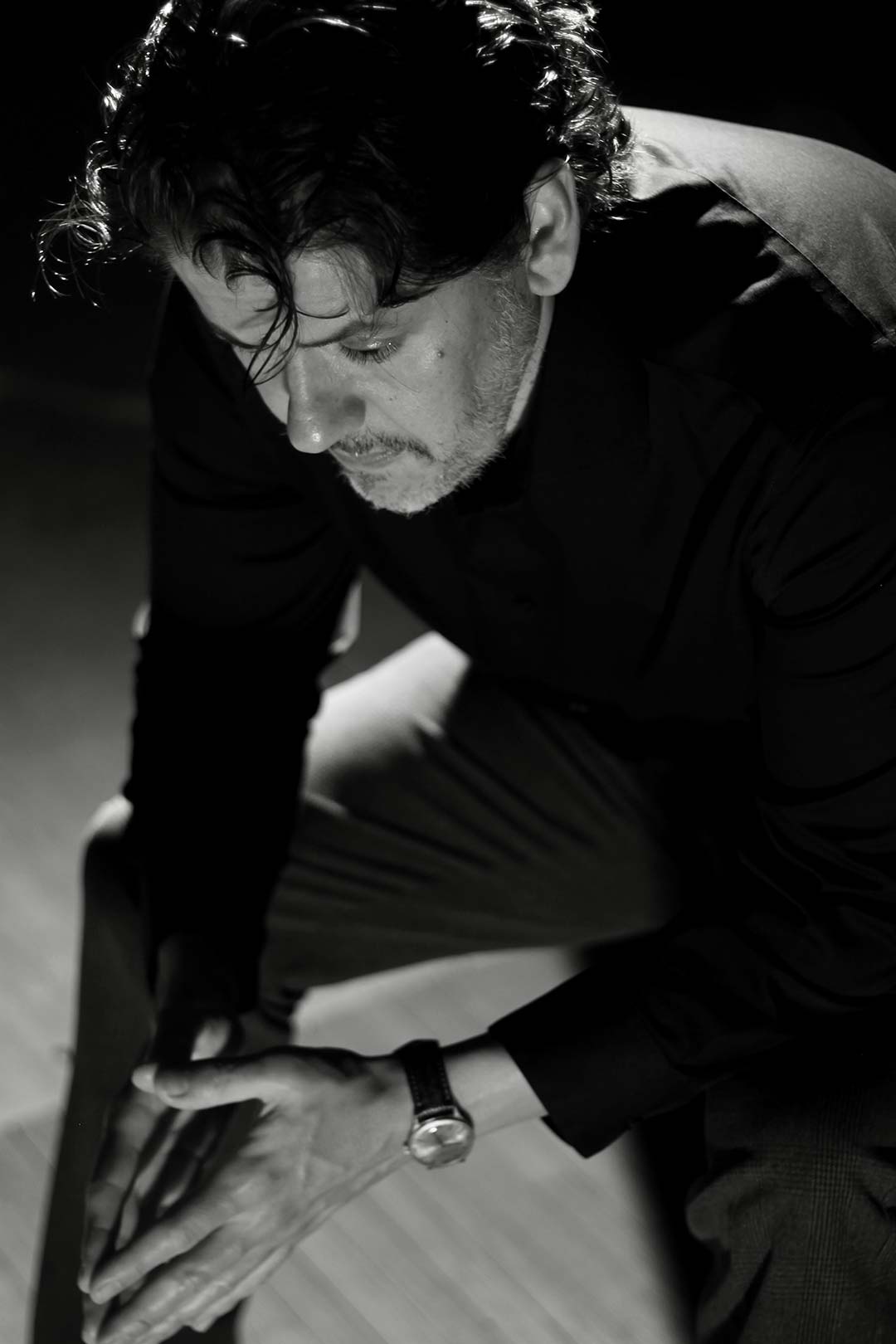
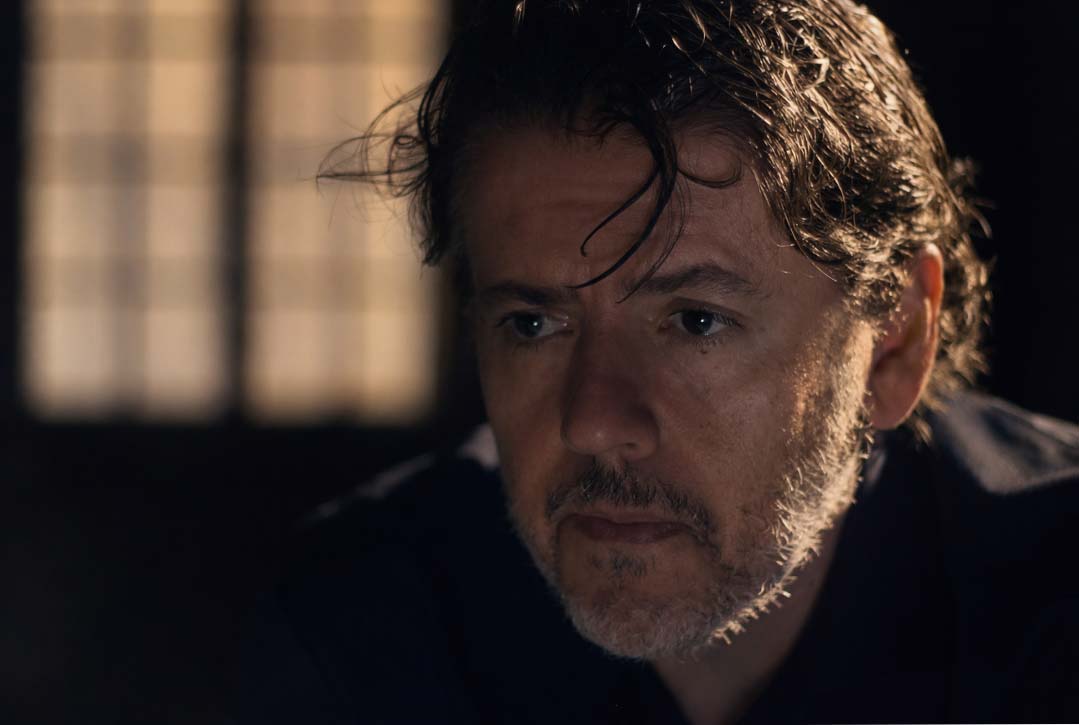
• Alfredo is a pianist, composer, anthropologist, and producer, who grew up in Brazil before settling in the United States. Trained as a classical pianist in Rio de Janeiro, he also holds a Ph.D. in cultural anthropology from Indiana University, where he taught for many years and collaborated closely with its Latin American Music Center. His work consistently integrates musical practice with a deep understanding of art in its social and cultural context.
• Minetti has conceived, directed, and produced numerous interdisciplinary projects, including Maria de Buenos Aires, Singing for Social Justice, A Night of Tango, and the Zero Hour Tango Fest. In 2012, he co-founded the company This Is Tango Now with dancers Fernanda Ghi and Guillermo Merlo, creating internationally touring productions such as Identidad and Carmen de Buenos Aires, which reimagined opera and tango through contemporary performance.
• Since 2014, Minetti has performed extensively as a duo with bandoneonist Richard Scofano throughout the United States, Brazil, and Argentina. Together they released Estaciones (2016) and Shin-Urayasu (2024), the latter nominated for the 2025 Latin Grammy Awards. Alongside his performance career, Minetti remains active as a writer, lecturer, and educator, leading workshops and educational concerts internationally.
Alfredo Minetti
Pianist, Composer & Anthropologist
• Alfredo is a pianist, composer, anthropologist, and producer, who grew up in Brazil before settling in the United States. Trained as a classical pianist in Rio de Janeiro, he also holds a Ph.D. in cultural anthropology from Indiana University, where he taught for many years and collaborated closely with its Latin American Music Center. His work consistently integrates musical practice with a deep understanding of art in its social and cultural context.
• Minetti has conceived, directed, and produced numerous interdisciplinary projects, including Maria de Buenos Aires, Singing for Social Justice, A Night of Tango, and the Zero Hour Tango Fest. In 2012, he co-founded the company This Is Tango Now with dancers Fernanda Ghi and Guillermo Merlo, creating internationally touring productions such as Identidad and Carmen de Buenos Aires, which reimagined opera and tango through contemporary performance.
• Since 2014, Minetti has performed extensively as a duo with bandoneonist Richard Scofano throughout the United States, Brazil, and Argentina. Together they released Estaciones (2016) and Shin-Urayasu (2024), the latter nominated for the 2025 Latin Grammy Awards. Alongside his performance career, Minetti remains active as a writer, lecturer, and educator, leading workshops and educational concerts internationally.
Alfredo Minetti
Pianist, Composer & Anthropologist
• Alfredo is a pianist, composer, anthropologist, and producer, who grew up in Brazil before settling in the United States. Trained as a classical pianist in Rio de Janeiro, he also holds a Ph.D. in cultural anthropology from Indiana University, where he taught for many years and collaborated closely with its Latin American Music Center. His work consistently integrates musical practice with a deep understanding of art in its social and cultural context.
• Minetti has conceived, directed, and produced numerous interdisciplinary projects, including Maria de Buenos Aires, Singing for Social Justice, A Night of Tango, and the Zero Hour Tango Fest. In 2012, he co-founded the company This Is Tango Now with dancers Fernanda Ghi and Guillermo Merlo, creating internationally touring productions such as Identidad and Carmen de Buenos Aires, which reimagined opera and tango through contemporary performance.
• Since 2014, Minetti has performed extensively as a duo with bandoneonist Richard Scofano throughout the United States, Brazil, and Argentina. Together they released Estaciones (2016) and Shin-Urayasu (2024), the latter nominated for the 2025 Latin Grammy Awards. Alongside his performance career, Minetti remains active as a writer, lecturer, and educator, leading workshops and educational concerts internationally.
Silvio Grand
Dancer, Choreographer & Actor
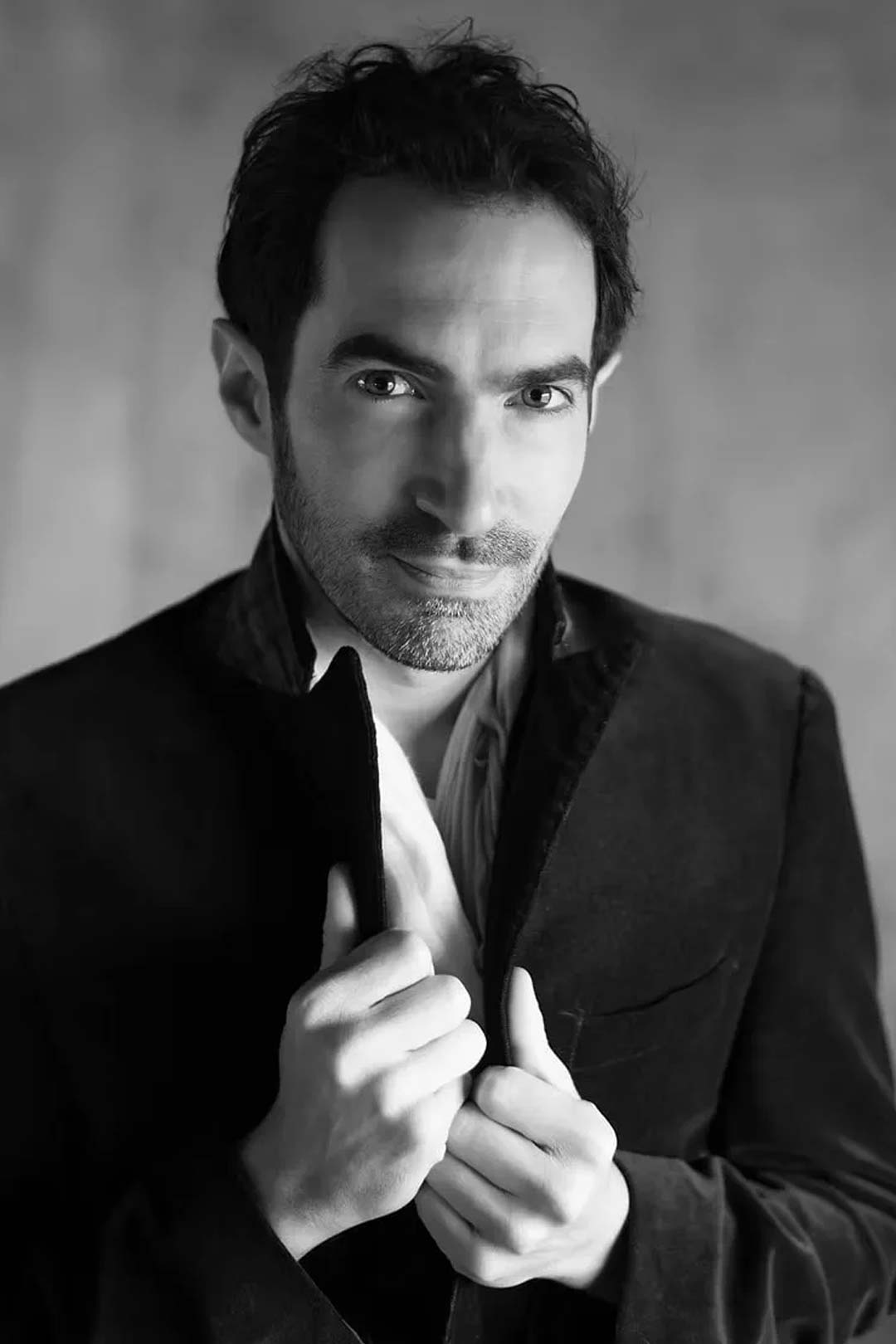
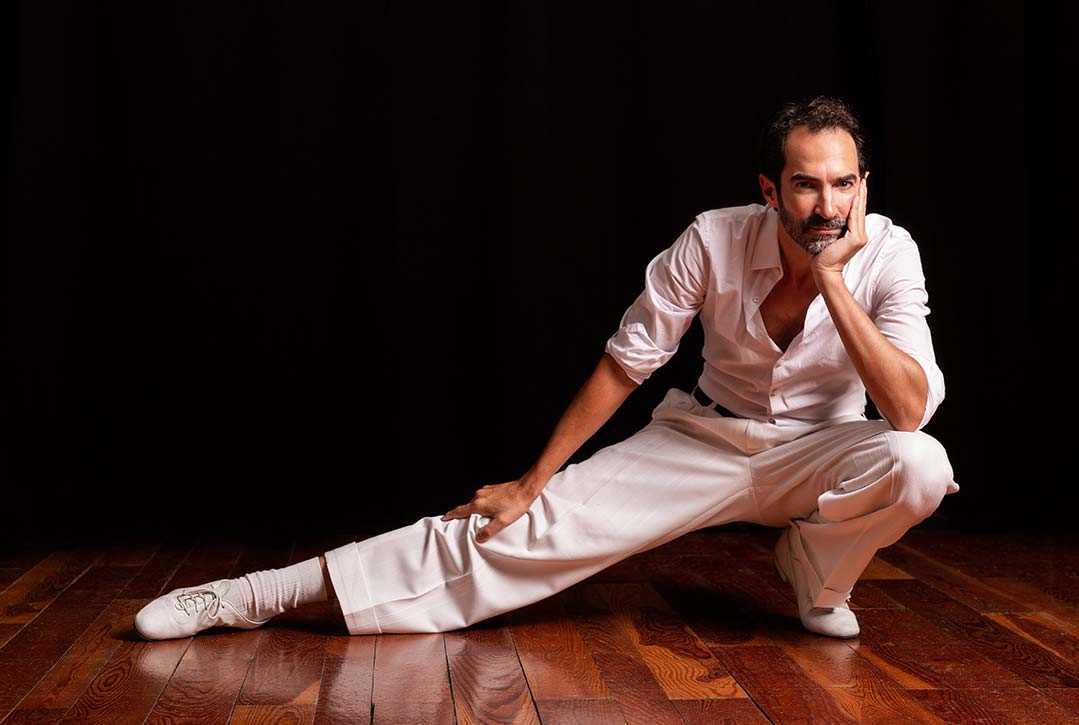
• Dancer, choreographer, and pedagogue, Silvio Grand brings a refined and contemporary perspective to stage tango. His work is characterized by technical clarity, elegance of movement, and a strong dramatic presence that balances subtlety, power, and musicality.
• With an extensive international trajectory, Silvio investigates the body as an expressive territory, exploring the balance between structure and freedom, form and emotion. His dance is built through precision of gesture and deep listening— to the partner and to the music—creating a physical narrative rich in intention and nuance.
• On stage, his presence reflects a profound understanding of tango as a living art form: one capable of renewal without losing its roots, and of creating a bridge between tradition, contemporaneity, and human depth.
Silvio Grand
Dancer, Choreographer & Actor
• Dancer, choreographer, and pedagogue, Silvio Grand brings a refined and contemporary perspective to stage tango. His work is characterized by technical clarity, elegance of movement, and a strong dramatic presence that balances subtlety, power, and musicality.
• With an extensive international trajectory, Silvio investigates the body as an expressive territory, exploring the balance between structure and freedom, form and emotion. His dance is built through precision of gesture and deep listening— to the partner and to the music—creating a physical narrative rich in intention and nuance.
• On stage, his presence reflects a profound understanding of tango as a living art form: one capable of renewal without losing its roots, and of creating a bridge between tradition, contemporaneity, and human depth.
Silvio Grand
Dancer, Choreographer & Actor
• Dancer, choreographer, and pedagogue, Silvio Grand brings a refined and contemporary perspective to stage tango. His work is characterized by technical clarity, elegance of movement, and a strong dramatic presence that balances subtlety, power, and musicality.
• With an extensive international trajectory, Silvio investigates the body as an expressive territory, exploring the balance between structure and freedom, form and emotion. His dance is built through precision of gesture and deep listening— to the partner and to the music—creating a physical narrative rich in intention and nuance.
• On stage, his presence reflects a profound understanding of tango as a living art form: one capable of renewal without losing its roots, and of creating a bridge between tradition, contemporaneity, and human depth.
Richard Scofano
Bandoneonist & Composer
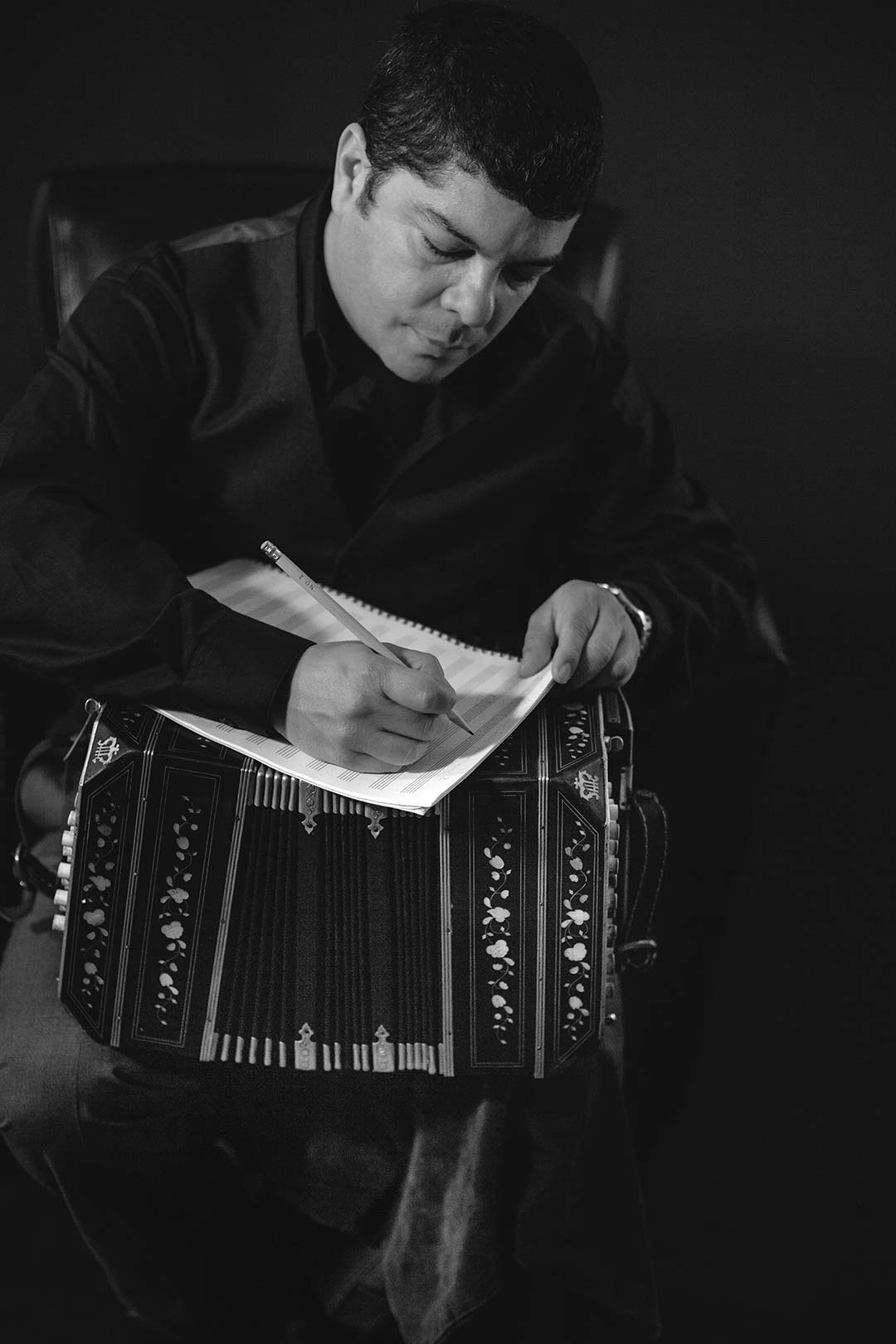
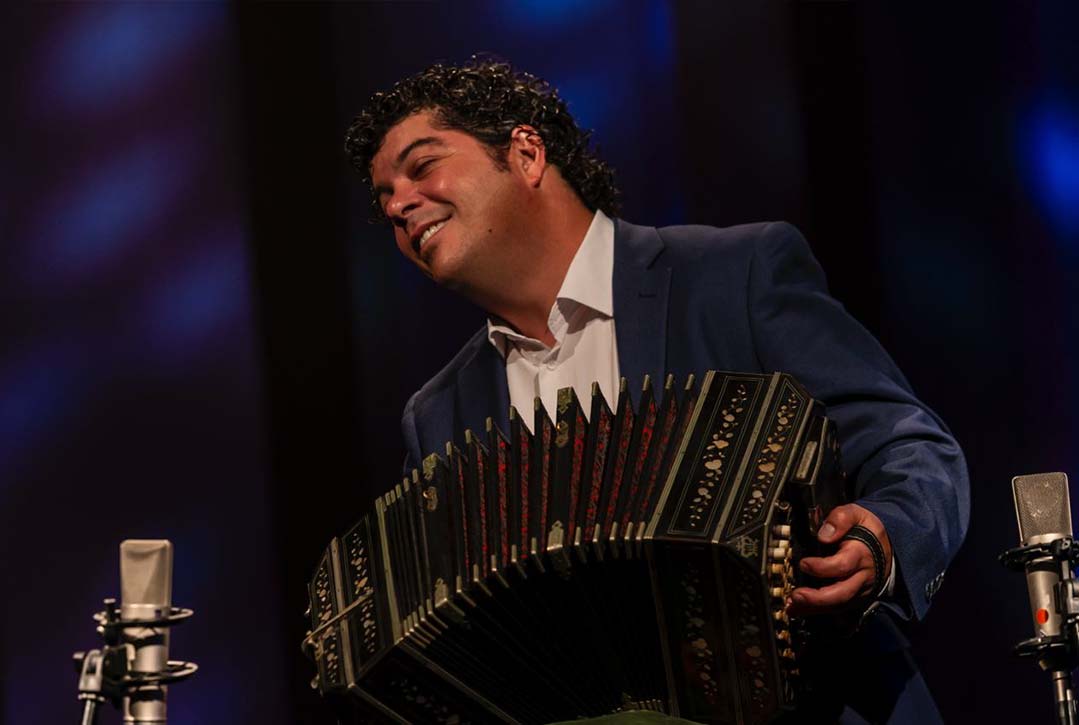
• Scofano is an Argentinian-American master bandoneonist, composer, arranger, and musical director, born in Paso de los Libres, Corrientes, into a family of three generations of bandoneonists. He grew up immersed in the folk traditions of Northeast Argentina and has lived in the United States for over 25 years. His music bridges tradition and a personal contemporary voice, blending Argentine folk, Brazilian, tango, and concert music.
• With more than four decades of professional experience, Scofano has performed throughout South and North America, Europe, Asia, and Australia. His work includes large-scale compositions such as Iberá (Concerto for Bandoneón and Orchestra) and La Tierra Sin Mal (Symphonic Poem), premiered with major orchestras in the United States, Argentina, and Brazil. His first album of original music, Estaciones, marked a defining moment in his compositional career.
• Scofano has collaborated extensively with leading artists including Alfredo Minetti, Yamandú Costa, and Sergio Assad, appearing at major concert halls and festivals worldwide. His most recent album, Shin-Urayasu, was nominated for the 2025 Latin Grammy Awards, affirming his position as one of the foremost voices in contemporary bandoneón music.
Richard Scofano
Bandoneonist & Composer
• Scofano is an Argentinian-American master bandoneonist, composer, arranger, and musical director, born in Paso de los Libres, Corrientes, into a family of three generations of bandoneonists. He grew up immersed in the folk traditions of Northeast Argentina and has lived in the United States for over 25 years. His music bridges tradition and a personal contemporary voice, blending Argentine folk, Brazilian, tango, and concert music.
• With more than four decades of professional experience, Scofano has performed throughout South and North America, Europe, Asia, and Australia. His work includes large-scale compositions such as Iberá (Concerto for Bandoneón and Orchestra) and La Tierra Sin Mal (Symphonic Poem), premiered with major orchestras in the United States, Argentina, and Brazil. His first album of original music, Estaciones, marked a defining moment in his compositional career.
• Scofano has collaborated extensively with leading artists including Alfredo Minetti, Yamandú Costa, and Sergio Assad, appearing at major concert halls and festivals worldwide. His most recent album, Shin-Urayasu, was nominated for the 2025 Latin Grammy Awards, affirming his position as one of the foremost voices in contemporary bandoneón music.
Richard Scofano
Bandoneonist & Composer
• Scofano is an Argentinian-American master bandoneonist, composer, arranger, and musical director, born in Paso de los Libres, Corrientes, into a family of three generations of bandoneonists. He grew up immersed in the folk traditions of Northeast Argentina and has lived in the United States for over 25 years. His music bridges tradition and a personal contemporary voice, blending Argentine folk, Brazilian, tango, and concert music.
• With more than four decades of professional experience, Scofano has performed throughout South and North America, Europe, Asia, and Australia. His work includes large-scale compositions such as Iberá (Concerto for Bandoneón and Orchestra) and La Tierra Sin Mal (Symphonic Poem), premiered with major orchestras in the United States, Argentina, and Brazil. His first album of original music, Estaciones, marked a defining moment in his compositional career.
• Scofano has collaborated extensively with leading artists including Alfredo Minetti, Yamandú Costa, and Sergio Assad, appearing at major concert halls and festivals worldwide. His most recent album, Shin-Urayasu, was nominated for the 2025 Latin Grammy Awards, affirming his position as one of the foremost voices in contemporary bandoneón music.
Beethoven’s Tango brings classical music, tango, and dance into a single, electrifying experience. Classical audiences will be drawn to its emotional depth and musical intensity, tango lovers to its pulse and passion, and dance enthusiasts to its raw physicality and presence. Blurring the lines between concert and movement, tradition and transformation, Beethoven’s Tango invites audiences of all kinds to feel creativity as something alive, urgent, and deeply human.
DOWNLOAD PDF DOSSIER HERE
Beethoven’s Tango brings classical music, tango, and dance into a single, electrifying experience. Classical audiences will be drawn to its emotional depth and musical intensity, tango lovers to its pulse and passion, and dance enthusiasts to its raw physicality and presence. Blurring the lines between concert and movement, tradition and transformation, Beethoven’s Tango invites audiences of all kinds to feel creativity as something alive, urgent, and deeply human.
DOWNLOAD PDF DOSSIER HERE